
We sailed out of Cagliari having safely deposited Chris at the railway station. Cagliari is very central and offers great sea, land and air connections around the Mediterranean and beyond. Very quickly you can be back into Europe.
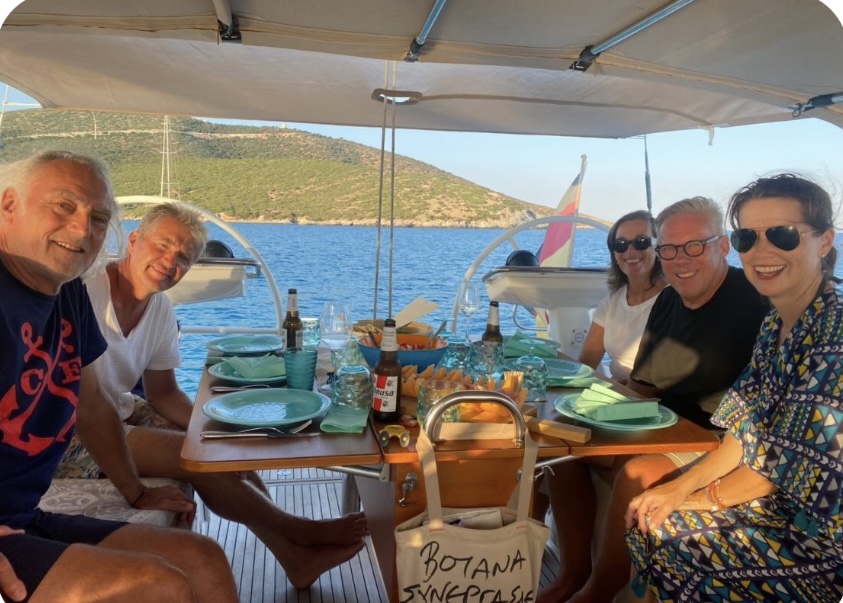
So now we are going to head to Spiaggia Zafferano to meet up with Sailing Yacht Ambra – Biggi and Torsten – who we met on Sicily. They are enjoying their summer and preparing to sail the ARC ( Atlantic Rally for Cruisers) in November – Las Palmas in the Canaries to the Caribbean. It’s a very popular race for cruising yachts and a great way to sail as part of a group. It was fun to catch up with them in Zafferano 🥂
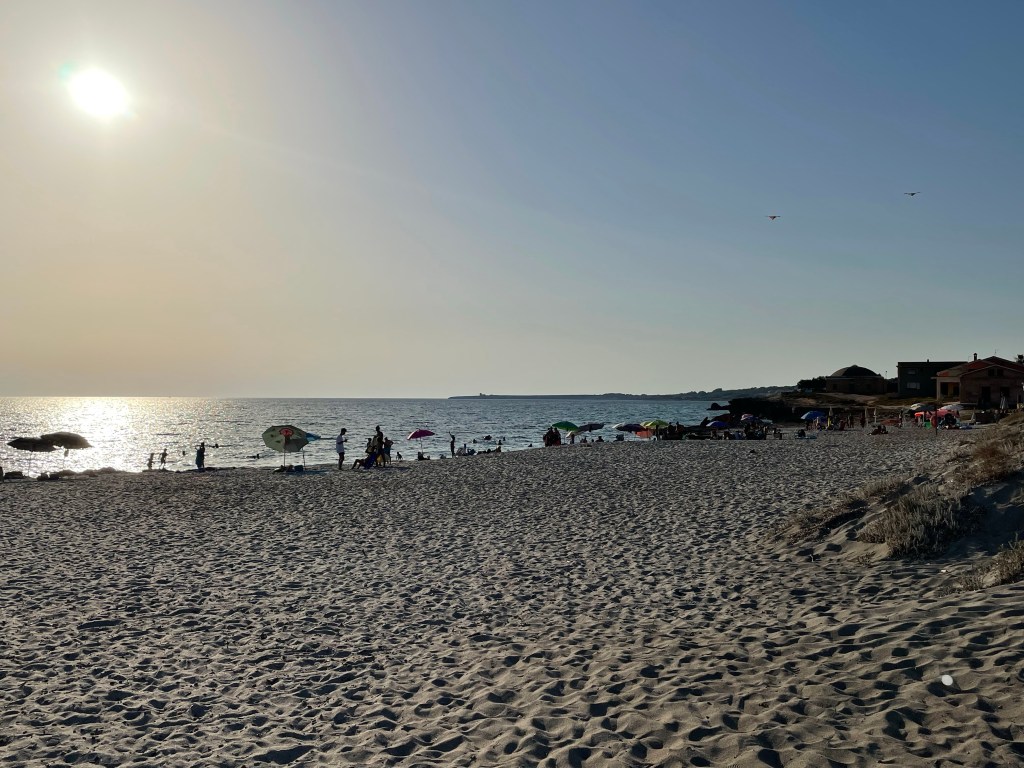
Porto Pino is just around the headland and we will head there just to see the long white beaches that everyone talks about.


We will sail around the next headland – two islands lie off the bottom west corner of Sardegna. Antioch which is joined to the main island by a causeway and then Isola di San Pietro – Carloforte.
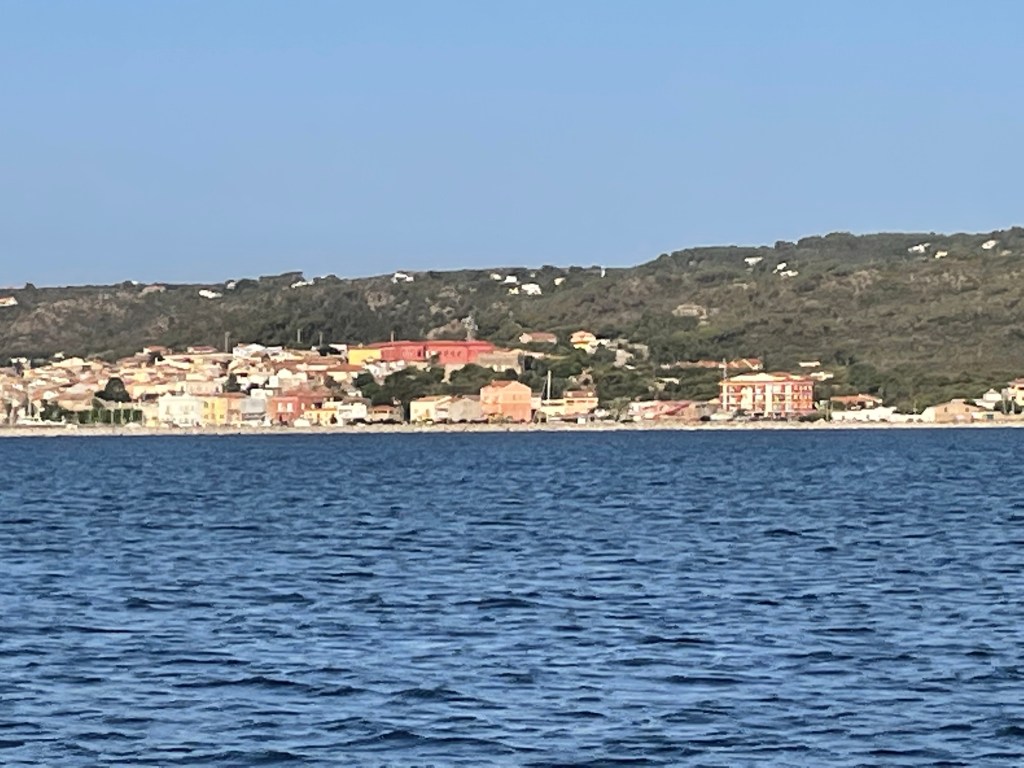
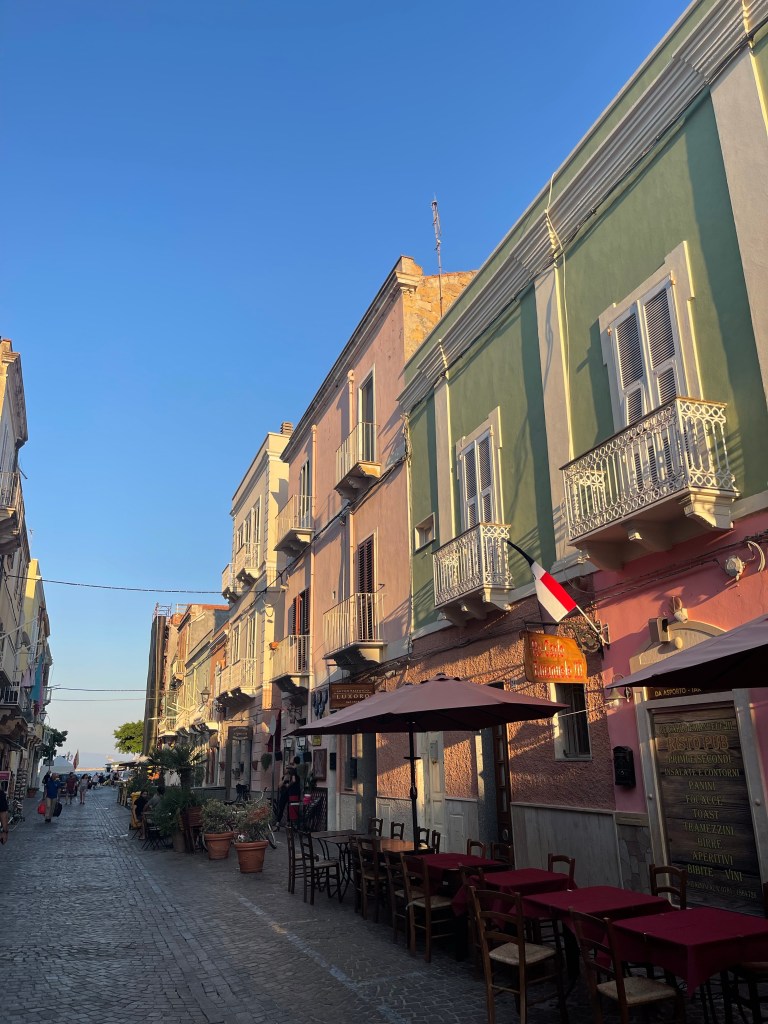
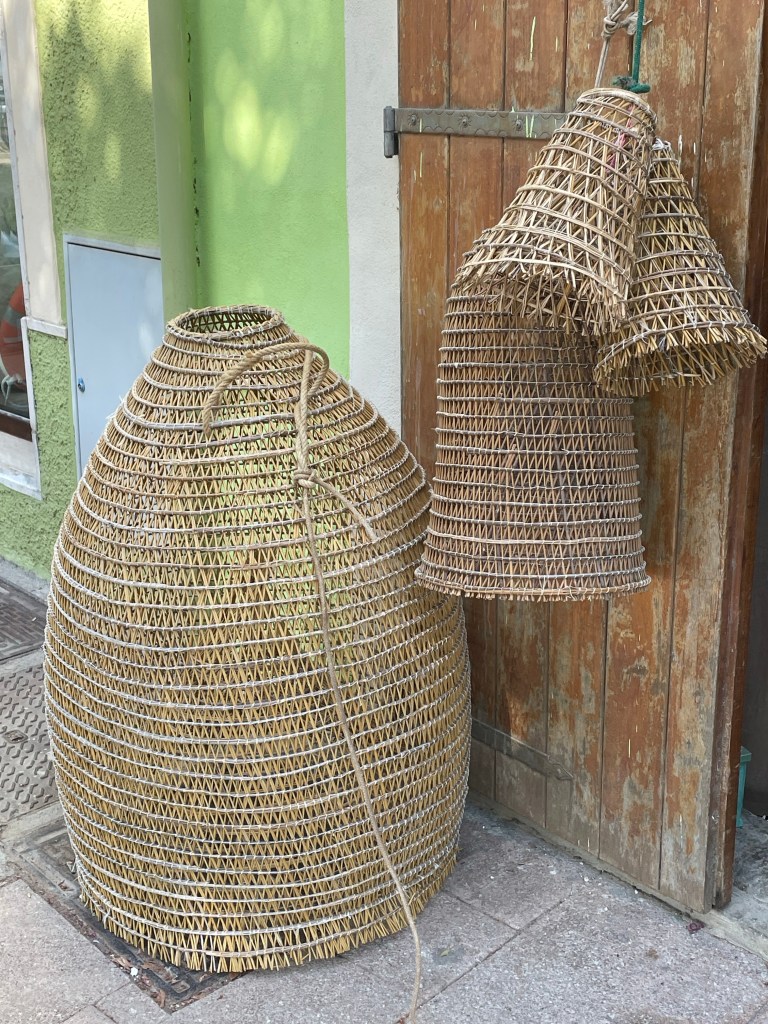
Carloforte is the town of the island and it is very nice. With quite a different flavour it was built by the Genovans in the 1400 and 1500’s. Different food too – a combination of Ligurian and African with a big emphasis on fish – especially Tonno- tuna – and the red variety which is highly prized. As for the vegetarian- it’s more tomato and mozzarella for me!
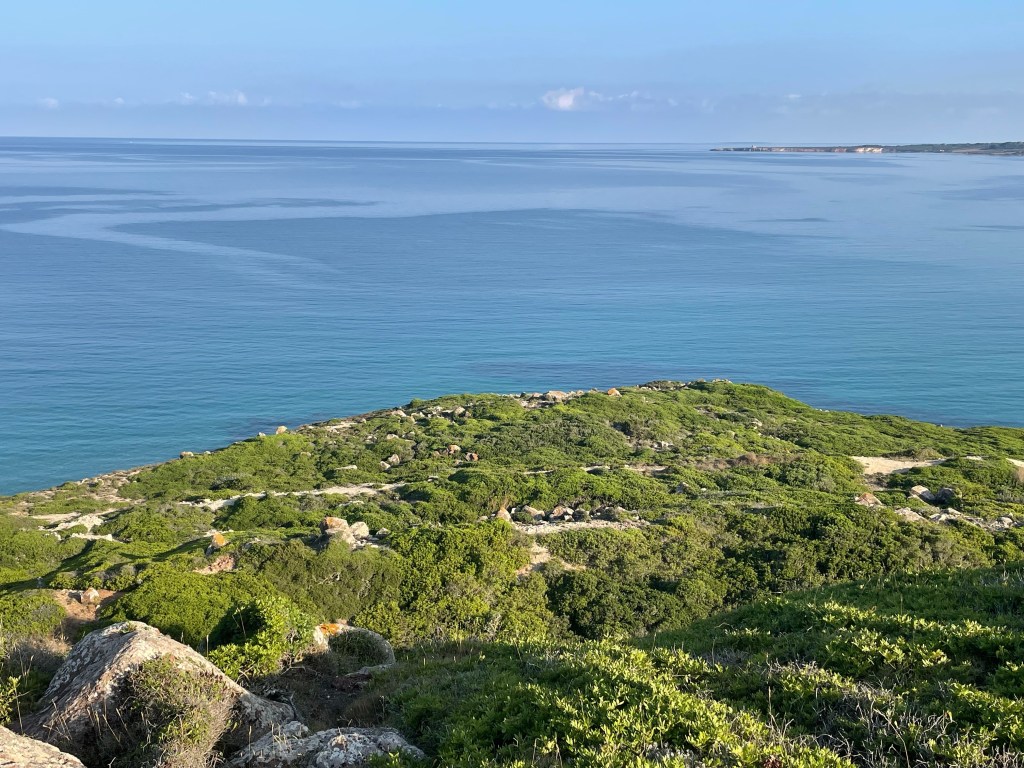
When we planned this trip – over the last 2 years – we decided on a clockwise direction. Travelling up the west coast is not so usual and it is mostly ‘wild’ coastline with huge cliffs and few anchorages or ports. But there is good weather and we can make our way west and north.


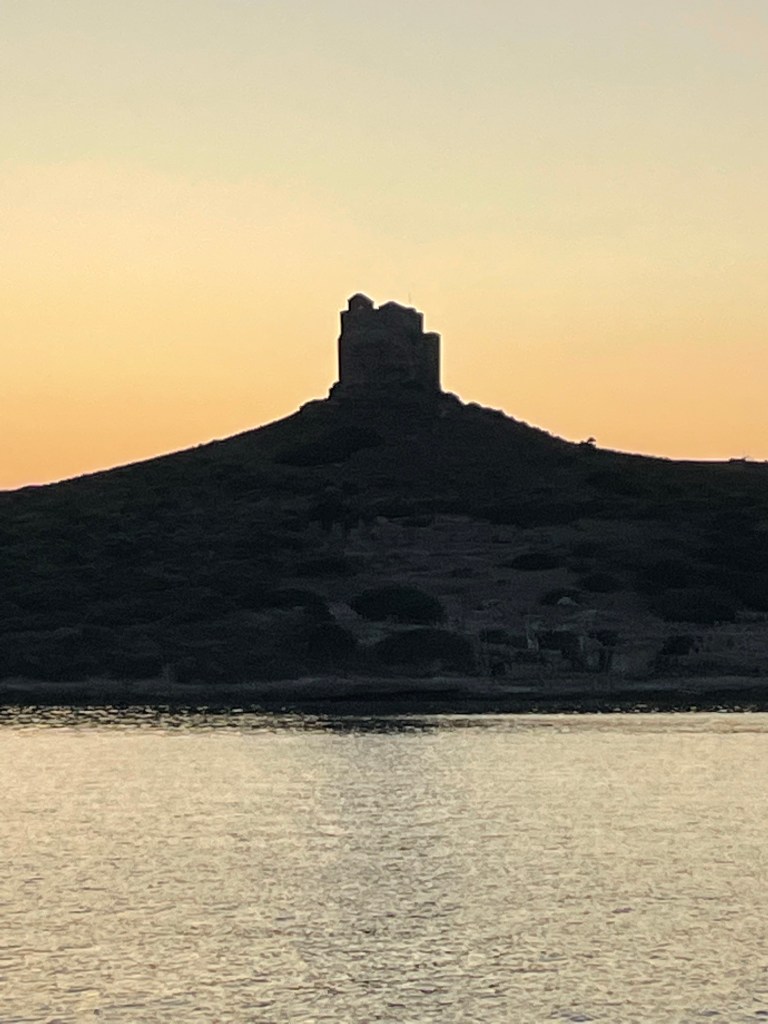
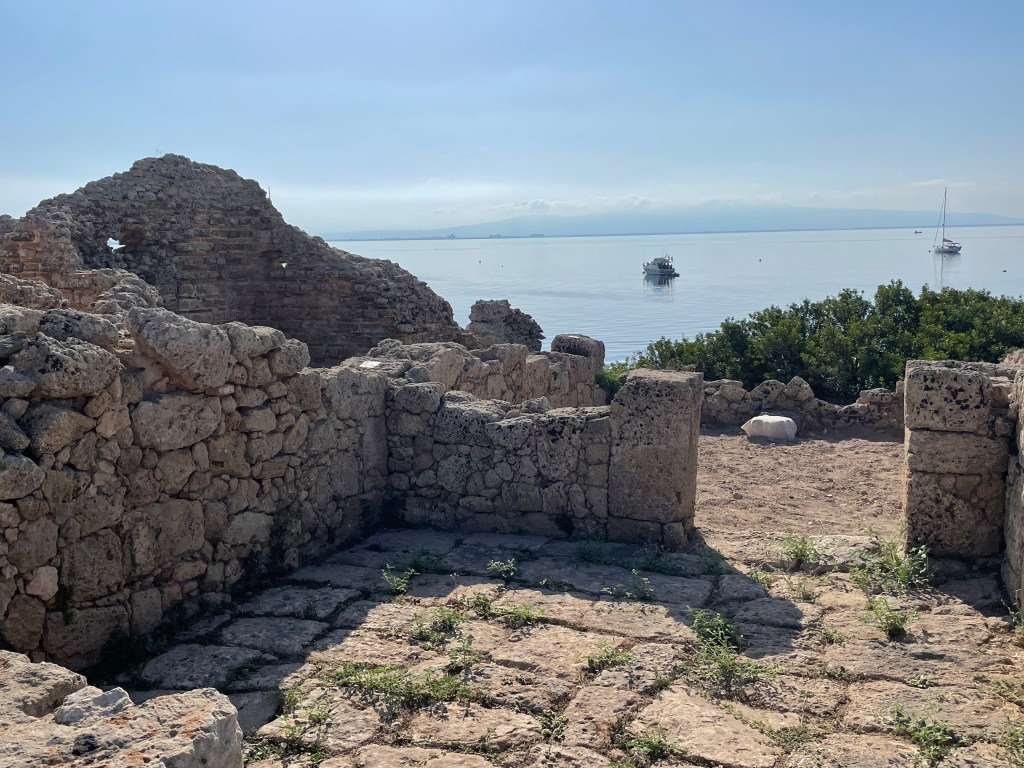
Tharros – an archeological site is our next stop. It is the remnants of a city built by the Phoenicians in the 8th century BC but it was a site already inhabited by the Nuraghi. Both Sardegna and Corsica have prehistoric sites that archeologists continue to discover. The giant standing stones, towers, crypts and wells are to be found all over both islands. The Spanish – Catalans – are also old inhabitants of this west coast and much of the language, food and building reflects their culture.

 janeandrogersadventure